
Can I Run Ducted Air Conditioning with Bedroom Doors Closed in Canberra Homes? Clear Rules, Risks and Fixes
Can I Run Ducted Air Conditioning with Bedroom Doors Closed in Canberra Homes? Clear Rules, Risks and Fixes Yes, but only if each closed room has a good return air path. Fully closed doors with no transfer path raise sta
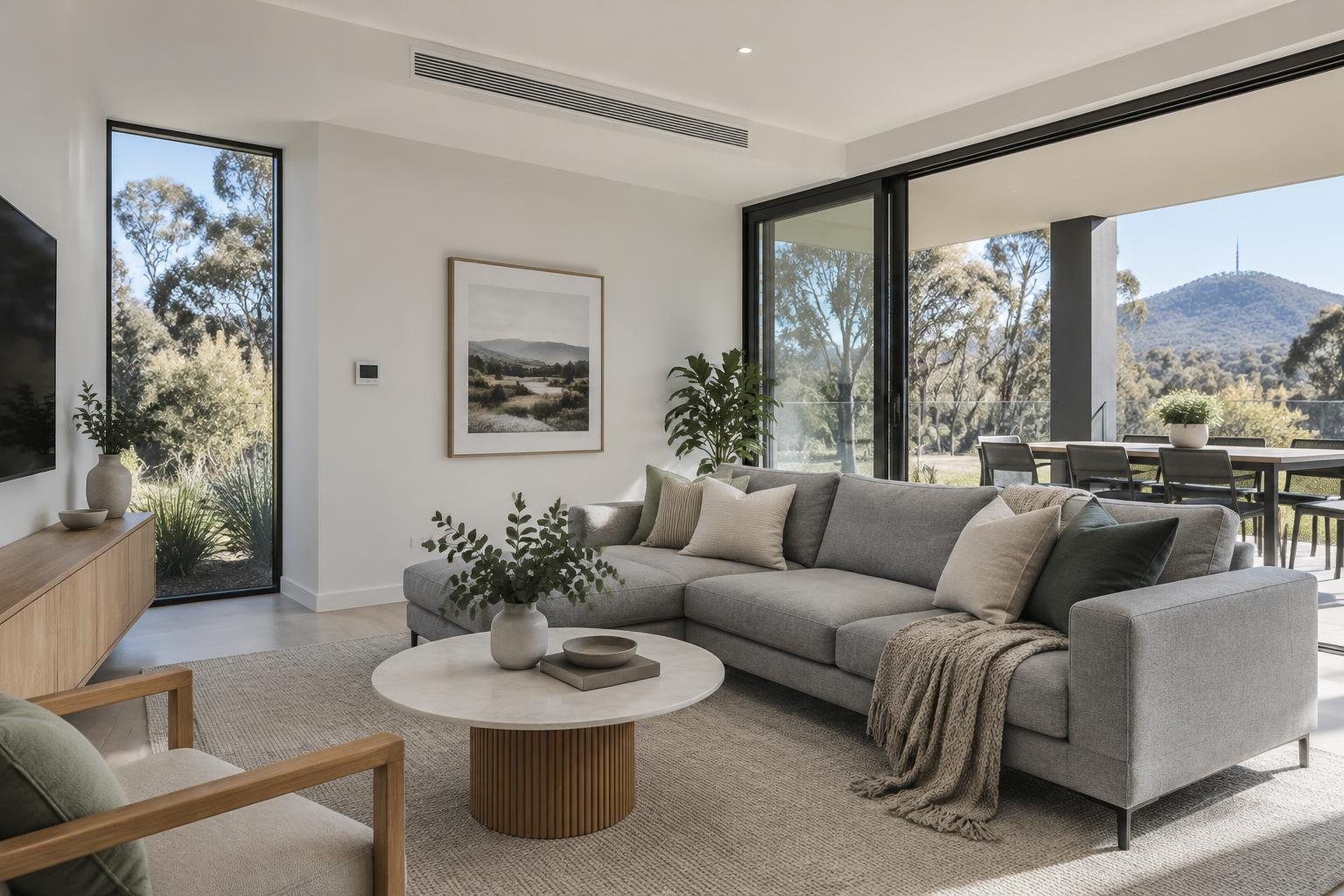
Can I Run Ducted Air Conditioning with Bedroom Doors Closed in Canberra Homes? Clear Rules, Risks and Fixes
Yes, but only if each closed room has a good return air path. Fully closed doors with no transfer path raise static pressure, starve airflow, increase noise, waste energy and can strain or ice the system. Provide a return route (door undercut, transfer grille or jump duct), keep enough zones/outlets open, and set fan/temperature sensibly.
Key takeaways
- Closed doors without a return path spike duct pressure, reduce airflow and comfort, and can damage compressors or fans over time.
- A practical rule: keep at least 50–60% of total system airflow available; never close most outlets while the system runs.
- Transfer grilles or jump ducts are the best night-time fix; door undercuts alone are often inadequate on carpeted bedrooms.
- High static in cooling can cause coil icing; in heating it raises head pressure—both raise bills and risk trips or faults.
- Designing returns right when you install ducted air conditioning in Canberra prevents pressure issues and improves efficiency.
If you’re planning, upgrading or troubleshooting ducted air conditioning in Canberra, return-air design and zone strategy matter as much as outlet placement. Canberra’s frosty winter mornings and sealed newer homes make pressure management critical at night when doors are closed.
Is this urgent or can it wait?
If your only issue is minor temperature drift with closed doors, it’s not urgent—adjust your fan speed, crack doors 10–20 mm, or open a nearby outlet. It’s urgent if you notice any of the following:
- Loud duct “whoosh” or whistling with doors closed
- Unit short-cycling, tripping the breaker, or error codes
- Ice on the indoor coil in summer or a burnt-dust smell in winter
- Return filter collapsing or being sucked into the grille
Electrical or refrigerant faults are not DIY—call a licensed ARCtick technician. We handle urgent faults via our air conditioning repairs team across Canberra.
Why do closed bedroom doors affect ducted air conditioning airflow?
Closed doors block the return path, so supply air pumped into a room can’t flow back to the return grille. Pressure rises in that room and in the ductwork, the fan moves less air (especially on systems without variable-speed fans), and comfort drops.
In cooling, reduced airflow causes the indoor coil to run too cold, risking icing and water leaks. In heating, pressure drives head pressure up, raising power draw and potentially tripping safeties. You’ll often hear whistling at door gaps or vents, and rooms become uneven—stuffy behind the door, draughty in the hallway.
How much gap do I need under bedroom doors for return airflow?
A typical 820 mm door with a 15–20 mm undercut over hard flooring can provide a modest return path. On carpet, the effective gap shrinks and often isn’t enough for a bedroom with a 100–150 L/s supply.
As a practical guide in Canberra homes:
- Hard floors: a 15–20 mm uniform undercut may be adequate for a single small outlet, if other nearby doors are partly open.
- Carpet: plan on transfer grilles or jump ducts; door undercuts alone usually won’t relieve pressure at night.
- Two or more large outlets in a bedroom: use a dedicated transfer path, regardless of undercut.
Is it okay to close some vents or zones with doors closed?
Yes, but keep enough free airflow for the system. Avoid shutting more than a couple of small outlets at once and keep at least 50–60% of the system’s designed airflow open.
Closing multiple outlets in several closed-door rooms is a common zoning mistake that spikes static pressure. If you’re not sure how to balance, see our guide on balancing airflow between zones, and avoid the biggest zoning mistakes Canberra homeowners make.
What’s the best way to keep bedroom doors closed and comfortable at night?
Provide a low-noise return path for each closed room and keep a minimum number of outlets open overall.
- Transfer grilles: A through-wall grille above the door or wardrobe transfers air to the hallway return, with internal baffles for privacy.
- Jump ducts: A short duct from the bedroom ceiling to the hallway ceiling is often quieter, great for carpeted rooms.
- Door undercut + hallway return: Works in some cases with hard floors and modest supply volumes.
- Variable fan control: Systems with pressure-responsive fans (e.g. some ActronAir models) can better cope when several doors are closed.
We compare the pros and cons in depth here: transfer grilles vs jump ducts.
Where should return air vents be placed if bedrooms are often closed?
Typically, locate the main return in the hallway adjacent to bedrooms so air can easily flow back. If the hallway isn’t central or doors stay closed, add transfer grilles or jump ducts to each bedroom.
Ceiling returns are common in Canberra and fine for reverse-cycle systems. In multi-storey homes, consider a return on each level to avoid pressure and temperature layering. See our guide: best return air placement for Canberra homes.
Will closed doors increase energy use or damage the system?
Yes—if they restrict airflow. High static pressure forces the fan to work harder and reduces heat exchange, so your unit runs longer for the same comfort. In extreme cases you can see coil icing (cooling), high head pressure (heating), noisy ducts, and even breaker trips.
If trips are happening, start here: why your ducted system trips the circuit breaker. And if you’re getting roof-space dampness or water, review these condensation and mould fixes.
How should I set my thermostat and fan at night in Canberra?
Use Auto fan and moderate setpoints. In winter, aim for 19–21°C overnight; in summer, 23–25°C. If several bedroom doors will be closed, reduce fan speed where your controller allows, and keep enough other outlets open to maintain airflow.
- Crack doors 10–20 mm if you hear whistling
- Avoid “Fan On” continuous if rooms get pressurised
- Use quieter night profiles if your system supports them
What will a technician check and do on site?
We measure, not guess. A licensed technician will:
- Measure external static pressure (Pa) at the fan and compare to the unit’s rating
- Measure supply airflow (L/s) and temperature split across the coil
- Inspect filter, return grille size, and blockage points
- Check zone dampers for correct operation and leakage
- Assess duct sizing, kinks, and insulation; look for crushed runs above bedrooms
- Conduct a smoke test under doors to confirm return paths
- Optimise fan profile and zoning logic where possible
- Recommend transfer grilles, jump ducts, or additional returns as needed
Electrical work follows AS/NZS 3000, and refrigerant handling is by ARCtick-certified personnel. Access Canberra licensing requirements apply to our work.
What Canberra-specific factors change the answer?
Canberra’s climate swings—minus temperatures in winter, 35°C+ in summer—push systems hard. In tightly sealed newer estates in Gungahlin, closed-door pressurisation happens faster. In 1970s brick-veneer homes around Woden, carpeted bedrooms and small undercuts are a common bottleneck.
- Bushfire smoke: When air quality is poor, a proper return path and clean filters reduce infiltration and pressure-driven leaks.
- Gas-to-electric transition: If you’re retiring ducted gas, design the new reverse-cycle return and zoning right from day one.
- Efficiency: High star-ratings (GEMS) and variable-capacity systems are more tolerant, but still need adequate airflow.
- Rebates: ACT Government programs change—ask us about current Home Energy Support eligibility when upgrading ducted systems.
Typical Canberra costs to fix closed-door airflow issues (guide only)
Guide only, not a quote. Prices vary by access, brand, roof height, fire-rated walls, and finishes.
| Fix / Option | What’s included | Typical Canberra range (AUD) | Notes |
|---|---|---|---|
| Transfer grille (per bedroom) | Acoustic-baffled grille, cut-out, paintable frame | $220–$450 | Great for wall above door; good privacy with baffles |
| Jump duct (per bedroom) | Ceiling grilles + insulated duct to hallway | $380–$750 | Quieter; better for carpeted rooms |
| Additional return (hallway) | Return box, grille, duct to unit, balancing | $900–$2,200 | Improves system-wide static pressure |
| Door trimming (per door) | Carpenter undercut on solid/hollow-core door | $120–$300 | May not be enough on carpet; aesthetic impact |
| Zone control optimisation | Reprogramming, damper recalibration, balancing | $220–$550 | Often paired with grilles/duct fixes |
| Fan profile tuning | Reduce max static, adjust ramp rates | $180–$350 | Controller-dependent; improves tolerance |
| Service + filter upgrade | Clean, coil check, better MERV filter | $220–$440 | Lower restriction filters reduce static |
Which symptoms matter most and how urgent are they?
| Symptom | Likely cause | Urgency | Next step |
|---|---|---|---|
| Whistling at doors/vents | High pressure, no return path | Moderate | Crack door, open outlet; plan transfer grille |
| Rooms stuffy/hallway draughty | Imbalanced zoning with closed doors | Low–Moderate | Rebalance zones; add jump ducts |
| Breaker trips or error codes | High head/iced coil | High | Turn off; call repairs. Keep doors open until fixed |
| Water dripping from ceiling return | Coil icing/condensate issue | High | Power off cooling; book repair |
| Filter collapsing inward | Excessive suction/static | High | Stop unit; upgrade filter/grille size; add returns |
Prevention and maintenance: simple steps that work
Small habits and routine checks keep your system breathing:
- Keep the return filter clean and use a low-resistance, appropriately rated filter
- Don’t close more than a couple of small outlets at once
- Use Auto fan and moderate setpoints to limit pressure spikes
- Schedule annual air conditioning servicing before peak season
- Plan transfer paths during renovations or when adding zones
When should I call Capital Climate Solutions?
Call us if you notice high noise, ice, trips, or persistent comfort issues when doors are closed. We’ll measure static, balance your system, and add the right return solutions to protect your unit and improve comfort.
If your system is older or unreliable under Canberra extremes, ask about smarter zoning or a system upgrade pathway. We install, upgrade and repair across the ACT and Queanbeyan. For urgent faults, our repair technicians can attend promptly.
Frequently asked questions
Is it better to leave doors open or closed in winter?
Open doors are generally better for airflow and efficiency. If you need privacy or to keep noise down, ensure each closed room has a return path via transfer grilles or jump ducts, and keep enough other outlets open to maintain system airflow.
Do transfer grilles reduce privacy or let noise through?
Quality grilles include internal baffles that block line-of-sight and reduce sound transfer significantly. They’re quieter than door undercuts and maintain airflow. For maximum privacy, jump ducts between ceiling grilles are often the best option.
Can I just cut my doors higher to fix airflow?
You can, but it’s often not enough on carpeted rooms and it changes the look of the door. Many homeowners prefer discrete transfer grilles or jump ducts that move more air with less noise and preserve the door appearance.
Are door undercuts enough on plush carpet?
Usually not. Carpet reduces the effective gap, restricting return flow. Bedrooms with medium to high supply airflow typically need a transfer grille or jump duct to run closed-door comfortably and quietly at night.
Is one central return enough?
Often yes if doors are open or there are effective transfer paths. If bedrooms are at the ends of long corridors, or doors are closed most nights, you may need a second return or jump ducts to relieve pressure and improve comfort.
Will closing doors void my air conditioner warranty?
Simply closing doors won’t void a warranty, but damage caused by improper use (like running with severely restricted airflow) may not be covered. Manufacturers expect systems to operate within design airflow and static pressure limits.
Should I run the fan-only mode with doors closed?
Fan-only can help move air, but if the doors are tightly closed with no transfer path it may still be noisy and ineffective. Create a proper return path first, then use fan-only to circulate without heating or cooling.
Do smart zone controls help with closed doors?
Yes. Smart zoning can limit how many zones close at once and adjust fan speed to keep static pressure reasonable. Some systems automatically modulate fan speed or reopen a relief zone when pressure rises.
How big should bedroom supply ducts be?
It depends on heat load, but many Canberra bedrooms see 100–150 L/s in heating. The higher the supply airflow, the more important a proper return path becomes. A technician will size outlets and transfer paths together during design.
Does bushfire smoke change how I should run the system?
Keep doors and windows shut to limit infiltration, run on recirculate, and ensure a clean return filter. A good return path reduces pressure-driven leaks from outside. Avoid blocking returns with plastic or dense filters that spike static pressure.
Is the advice different for two-storey homes?
Yes—stack effect and temperature layering matter. Provide a return on each level, balance zone damper timing carefully, and use transfer paths to bedrooms that are often closed. Consider night profiles to limit fan speed after bedtime.
I’m planning new ducted AC—how do I “design out” this problem?
Place a central hallway return near bedrooms, size the return grille and duct generously, include transfer grilles or jump ducts for closed bedrooms, and choose a variable-capacity system. We cover this during ducted system design and installation.
Need help now? Capital Climate Solutions can measure static pressure, balance your zones, and install transfer grilles or jump ducts so you can sleep with doors closed—comfortably and efficiently. Call 0434 096 497 or enquire online.
Plan the zones and return-air path together
Ducted design starts with the rooms you want to condition simultaneously. A bedroom cluster used overnight can have a different load from a sunny living area used in the afternoon. Ask which zones must remain open, how the system maintains minimum airflow and whether the controller can regulate individual room temperatures or only open and close dampers.
A return-air grille needs a clear path from the occupied rooms. Closing bedroom doors can restrict circulation if there is no suitable transfer path. Discuss door positions, return placement and noise before selecting equipment. More zones do not automatically mean lower bills; the system must operate safely at its minimum airflow.
Retrofit access and existing ducts need inspection
A manhole does not guarantee a workable ducted installation. Roof height, truss layout, insulation, service clearances, drainage and electrical supply all matter. Old gas-heating ducts may need replacement or alteration: their condition, insulation and dimensions must suit the new airflow and design. Reuse should be an inspected option, not a blanket promise.
Request a drawing of outlets, returns and equipment locations, with separate allowances for electrical upgrades and access work. Installed-price examples are budgeting guides rather than verified customer invoices. Commissioning should check airflow, drainage and controller operation against the agreed scope. Compare a multi-split alternative where ceiling access is limited.
Sources and further reading
- Australian Government — Zoned Energy Rating Label
Explains climate-specific heating/cooling ratings, output capacity and noise figures; not a guarantee of a household's bills.
- Australian Refrigeration Council — Look for the Tick
Find licensed refrigeration businesses and check refrigerant-handling requirements. This link does not certify this business.
These sources support the general guidance, not this business's prices, credentials or project outcomes. Confirm current product and program conditions before committing to work.
Talk to Canberra's air conditioning specialists
Free onsite quotes across Canberra. Same-week bookings for most jobs.