
What are the pros and cons of underfloor ducted air conditioning for Canberra homes? Clear answers and when it makes sense
What are the pros and cons of underfloor ducted air conditioning for Canberra homes? Clear answers and when it makes sense Underfloor ducted air conditioning can work brilliantly in Canberra’s winters if your home has a
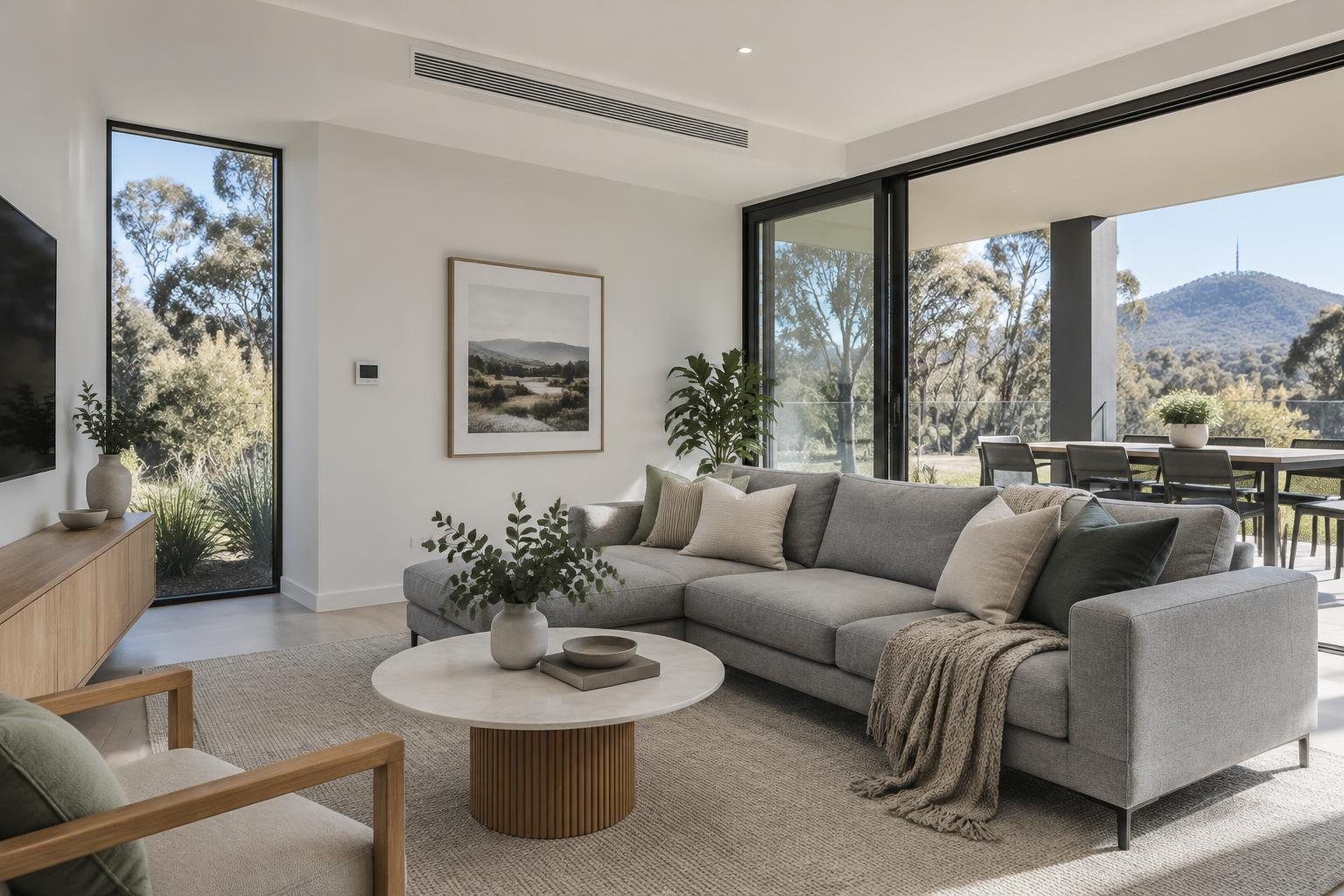
What are the pros and cons of underfloor ducted air conditioning for Canberra homes? Clear answers and when it makes sense
Underfloor ducted air conditioning can work brilliantly in Canberra’s winters if your home has a raised timber floor and a dry, accessible subfloor. It delivers warm air at floor level, but it carries dust, moisture and smoke risks if the subfloor isn’t sealed and filtered. Slab-on-ground homes usually aren’t suitable.
Key takeaways
- Underfloor ducted suits raised timber floors with dry, pest-managed and sealable subfloors; slab homes in Gungahlin and Molonglo should avoid it.
- Floor-level supply boosts winter heating comfort in Canberra’s -5°C mornings, but returns should be higher on a wall to avoid recirculating dust.
- Expect higher install complexity and cost than standard ceiling ducted due to subfloor works, sealing, filters and access constraints.
- Bushfire smoke and red-dust events demand better filtration and subfloor sealing, otherwise underfloor systems can draw contaminants.
- This is a reverse-cycle solution; for Canberra efficiency, choose high star-rated units, correct duct sizing and proper zoning setup.
Is it urgent to decide on underfloor ducted air conditioning?
If your current heating is failing in winter, call us to discuss options now, as lead times in peak season can stretch. If you’re planning a renovation, decide early; underfloor installs require coordinated subfloor works. Electrical and refrigerant tasks must be done by licensed technicians—don’t DIY.
Underfloor ducted is one pathway within broader ducted solutions. If you’re comparing whole-home options, see our ducted air conditioning service in Canberra for system types, zoning and design fundamentals.
What is underfloor ducted air conditioning and how does it differ from ceiling ducted in Canberra?
Underfloor ducted supplies conditioned air through floor grilles, with ducts running beneath a raised timber floor. Ceiling ducted runs in roof space and supplies through ceiling diffusers. Underfloor suits homes with accessible subfloors; ceiling ducted suits homes with sufficient roof space.
In Canberra, underfloor supply improves winter comfort by warming from the feet up, reducing stratification. Ceiling supply is simpler to install and usually cheaper in slab homes with ample roof space. For help choosing outlet positions, read Should I choose ceiling vents or floor vents for ducted air conditioning?
What are the main pros of underfloor ducted for Canberra winters?
Underfloor supply shines in winter because warm air introduced at floor level stays in the occupied zone longer before rising. That can mean faster warm-up and greater perceived comfort at lower setpoints.
- Warm feet and less stratification in high-ceilinged rooms.
- Discreet appearance with floor grilles; no bulkheads or ceiling diffusers.
- Quieter rooms because ducts and branches are under the floor, away from ears.
- Good retrofit option where roof spaces are limited or inaccessible.
What are the key cons and risks of underfloor ducted in Canberra?
The drawbacks arise from what lives under your floor—dust, moisture, pests and smoke can be drawn in without proper sealing and filtration. Access for maintenance can also be trickier than ceiling installs.
- Subfloor dust and soil odours can enter if the plenum isn’t sealed thoroughly.
- Bushfire smoke and PM2.5 can be entrained without upgraded filters and tight subfloor sealing.
- Moisture, mould and termite risk if ventilation and damp-proofing are inadequate.
- Rodents can damage ductwork without mesh barriers and robust insulation wraps.
- Higher install complexity and cost compared with standard ceiling ducted.
Is my Canberra home suitable for underfloor ducted air conditioning?
Suitable homes have raised timber floors with 400–600 mm crawlspace clearance, a generally dry subfloor, and the ability to seal and draught-proof. Homes on concrete slabs typically are not suitable without major works.
- Raised-floor cottages and 1960s–80s brick-veneer homes in areas like Woden often suit underfloor runs.
- Modern slab-on-ground homes in Gungahlin usually suit ceiling ducted or multi-split systems instead.
- Townhouses with limited roof space may consider underfloor if access is safe and compliant.
For roof-space constraints and alternatives, see Optimal Roof Space for Ducted AC in Canberra Homes.
How should return air be placed for an underfloor system?
We recommend return air grilles at mid to high wall level, not at the floor, to prevent recirculating subfloor dust and to reduce the risk of drawing contaminants from floor level. Return placement is critical for balanced airflow and noise control.
Learn more in our guide: Where Should Return Air Vents Be Placed in Ducted Air Conditioning?
How does underfloor ducted perform in Canberra’s 35°C+ summers?
It cools adequately, but cool air at floor level can pool unless airflows are well balanced. Ceiling supply often feels more natural for cooling, as cool air sinks. Underfloor systems need careful diffuser selection and balancing to push cool air into the occupied zone.
- Use adjustable floor grilles and higher static fans to achieve throw.
- Maintain good return placement to avoid short-cycling and temperature layering.
- Consider additional ceiling or high-wall returns in larger open areas.
What does a compliant underfloor ducted installation involve in the ACT?
A compliant install follows ARCtick refrigerant handling, Access Canberra licensing, and AS/NZS 3000 for electrical. Subfloor works must also respect termite management plans and ventilation requirements.
- Detailed subfloor assessment for moisture, clearance, structural obstructions and pest activity.
- Sealing subfloor plenums, adding vapour barriers and draught-proofing as needed.
- Correct duct sizing, R-value insulation and mechanical support to prevent sagging.
- Return air design with accessible filter grilles and sound attenuation where needed.
- Zone controls sized for underfloor static pressures; accessible zone motors.
- Commissioning: airflow balancing, static pressure checks and thermostat calibration.
What will the technician do on site for underfloor ducted in Canberra?
We start with a room-by-room heat load and a subfloor inspection, then design for winter heating dominance typical in Canberra. On installation and commissioning, we cover the following:
- Measure subfloor relative humidity and check drainage; recommend moisture control where needed.
- Map duct routes that avoid structural members and services; install hangers and saddles.
- Seal penetrations with fire- and pest-appropriate sealants; fit ember-proof mesh at vents.
- Install R1.5–R2.0 duct insulation minimum; wrap joins and vapour seal.
- Fit floor grilles with child-safe, low-noise designs; test for rattles and resonance.
- Place returns correctly and install a high-efficiency filter grille for bushfire smoke events.
- Commission zones, test static, record supply temperatures at diffusers, and show you filter maintenance.
What Canberra-specific factors should I consider (rebates, smoke, gas transition)?
The ACT is transitioning away from gas, and reverse-cycle systems are central to that shift. Choose a high-efficiency reverse-cycle unit to maximise winter performance and leverage home energy support initiatives where eligible.
- ACT Government Home Energy Support rebates may apply for eligible households; programs change, so check current criteria.
- Bushfire smoke: specify a filter grille capable of MERV 11–13 equivalents and ensure tight subfloor sealing.
- Evoenergy/ActewAGL: consider your electrical supply capacity; some ducted units need dedicated circuits and possibly upgrades.
- GEMS star ratings matter; higher COP in heating saves significantly across Canberra winters.
For reverse-cycle fundamentals tailored to our climate, see our reverse cycle air conditioning service.
How does underfloor ducted compare to other options in Canberra?
Underfloor ducted competes with ceiling ducted and multi-split systems. It’s best where subfloor access is good and roof space is tight, or where winter comfort is the top priority. Ceiling ducted is often simpler in slabs; multi-splits suit staged budgets or strata constraints.
- Ceiling ducted: easier in slabs, generally lower retrofit complexity, better for cooling distribution.
- Multi-split: flexible, avoids ducts, strong for apartments and townhouses with body corporate constraints.
- Hydronic heating: beautiful heat but higher install cost; cooling still needed.
If you’re weighing system types for your home layout, our air conditioning maintenance page explains how upkeep differs by system and the real-life implications of each choice over ten winters.
What equipment pairs well with underfloor ducted in Canberra’s extremes?
Look for ducted units with robust heating output at -5°C, strong external static pressure for longer duct runs, and intelligent zoning. We often specify Australian-designed options that handle both winter heating and summer cooling efficiently.
Brands like ActronAir offer high-static, reverse-cycle ducted systems designed for Australian conditions, which can help when underfloor ducts need extra pressure to balance airflow.
What does underfloor ducted cost in Canberra? (guide only, not a quote)
Costs vary with access, subfloor works, system capacity, zoning and filtration choices. Underfloor installs typically cost more than ceiling ducted due to sealing, moisture management and access constraints. The table below gives indicative ranges only.
| Scenario | Typical Canberra price range (guide only) | What changes the price |
|---|---|---|
| Underfloor ducted (raised-floor, 3–4 bed) | $14,000 – $26,000 | Subfloor clearance, sealing/damp-proofing, number of zones, filter upgrades, brand, electrical upgrades |
| Ceiling ducted (single-storey, adequate roof space) | $12,000 – $22,000 | Duct length, roof access, zones, return design, unit size and brand |
| Underfloor retrofit extras (moisture/ventilation) | $1,000 – $4,000 | Vapour barriers, subfloor fans, drainage corrections, pest barriers |
| High-efficiency filter grille upgrade | $300 – $800 | Filter size, MERV equivalent, noise attenuation requirements |
| Annual service and filter media | $180 – $350 | Access difficulty, filter replacements, zone checks, duct inspections |
For deeper cost comparisons across system types, you may find this useful: Cost comparison between ducted and 4 split systems.
How do I maintain an underfloor ducted system in Canberra?
Underfloor systems need disciplined filter changes and occasional subfloor inspections. Floor grilles can collect dust and debris more quickly than ceiling diffusers, especially in high-traffic areas.
- Clean or replace return filters every 1–3 months in winter peaks, more often during smoke events.
- Vacuum floor grilles and inspect for toys, pet hair, and debris.
- Annual professional service: airflow checks, zone function tests, duct insulation and seal check.
- Subfloor check after heavy rain to ensure moisture control remains effective.
When should I call a technician about my underfloor ducted system?
Call if you notice unusual smells, visible dust at grilles, reduced airflow, rattling under the floor, or poor heating on frosty mornings. Electrical or refrigerant work is not a DIY task—licensed ARCtick and Access Canberra technicians are required.
For ongoing reliability and to catch issues early, lock in a yearly service ahead of winter; Canberra’s peak season books out quickly.
Frequently asked questions
Can underfloor ducted work in a concrete slab home?
Generally no, unless ducts are planned in during construction via in-slab chases or raised floors. Retrofitting under a slab is impractical. Slab homes typically suit ceiling ducted, bulkheads, or multi-split systems for efficient heating and cooling.
Will underfloor ducted stir up dust in my home?
It can if the subfloor isn’t sealed and filtered properly. We design a sealed subfloor plenum, use high-efficiency return filters, and recommend mid-high wall returns to reduce dust recirculation. Regular grille vacuuming and filter maintenance are essential.
Is underfloor ducted noisier than ceiling ducted?
With correct duct sizing, insulation and balancing, underfloor systems are typically very quiet at the grille. Most noise issues come from undersized ducts or rattling floor grilles, which we prevent with proper supports, seals and commissioning.
Do I need special filters because of bushfire smoke?
Yes, a higher efficiency return filter (MERV 11–13 equivalents) helps capture fine smoke particles. Pair it with good subfloor sealing to minimise smoke infiltration. Expect more frequent filter changes during smoke events to maintain airflow and protect the unit.
How do zoning and underfloor ducted systems work together?
Zoning works well with underfloor systems if ducts are sized for the higher static pressure and zone dampers are accessible. We balance airflow to avoid whistling and ensure rooms heat evenly, especially critical during cold snaps in Canberra winters.
Will floor grilles be a trip hazard or collect debris?
Quality low-profile grilles minimise trip risks. Positioning away from door thresholds and using damped, louvred designs reduces issues. They will collect some debris; periodic vacuuming and checks keep them clean and performing well.
Is underfloor ducted more expensive than ceiling ducted?
Usually yes. Underfloor installs add sealing, moisture management and access time. Expect underfloor to cost roughly $2,000–$5,000 more than an equivalent ceiling ducted install, depending on the subfloor condition, zones and filtration choices.
What if my subfloor is damp or has limited clearance?
Persistent dampness or very low clearance can rule out underfloor ducted. We may specify moisture control measures, but if they’re not feasible, a ceiling ducted or split system design will be safer, more reliable and compliant in the long term.
Can I combine underfloor supply with ceiling return?
Yes, and we often recommend it. Floor supply with higher wall or ceiling return gives good circulation for heating and reduces dust intake. The exact return height depends on room volumes and noise considerations, set during design and commissioning.
What’s the best thermostat location for underfloor systems?
Place the thermostat at seated head height on an internal wall away from direct sun, drafts and supply grilles. This gives a reliable average room temperature and prevents short cycling, especially important for consistent winter comfort.
How soon should I plan an underfloor install before winter?
Start in autumn or earlier. Subfloor works and coordination can add time, and Canberra’s winter rush strains supply chains. Planning early ensures access to preferred units, better scheduling and thorough commissioning before frosts arrive.
Thinking underfloor ducted could suit your home? Let’s confirm subfloor suitability, design for Canberra’s winters, and price options clearly. Call Capital Climate Solutions on 0434 096 497 or send an enquiry.
Plan the zones and return-air path together
Ducted design starts with the rooms you want to condition simultaneously. A bedroom cluster used overnight can have a different load from a sunny living area used in the afternoon. Ask which zones must remain open, how the system maintains minimum airflow and whether the controller can regulate individual room temperatures or only open and close dampers.
A return-air grille needs a clear path from the occupied rooms. Closing bedroom doors can restrict circulation if there is no suitable transfer path. Discuss door positions, return placement and noise before selecting equipment. More zones do not automatically mean lower bills; the system must operate safely at its minimum airflow.
Retrofit access and existing ducts need inspection
A manhole does not guarantee a workable ducted installation. Roof height, truss layout, insulation, service clearances, drainage and electrical supply all matter. Old gas-heating ducts may need replacement or alteration: their condition, insulation and dimensions must suit the new airflow and design. Reuse should be an inspected option, not a blanket promise.
Request a drawing of outlets, returns and equipment locations, with separate allowances for electrical upgrades and access work. Installed-price examples are budgeting guides rather than verified customer invoices. Commissioning should check airflow, drainage and controller operation against the agreed scope. Compare a multi-split alternative where ceiling access is limited.
Sources and further reading
- Australian Government — Zoned Energy Rating Label
Explains climate-specific heating/cooling ratings, output capacity and noise figures; not a guarantee of a household's bills.
- Australian Refrigeration Council — Look for the Tick
Find licensed refrigeration businesses and check refrigerant-handling requirements. This link does not certify this business.
These sources support the general guidance, not this business's prices, credentials or project outcomes. Confirm current product and program conditions before committing to work.
Talk to Canberra's air conditioning specialists
Free onsite quotes across Canberra. Same-week bookings for most jobs.