
How Do I Clean My Ducted Air Conditioning in Canberra? Safe DIY Steps and When to Call a Pro
How Do I Clean My Ducted Air Conditioning in Canberra? Safe DIY Steps and When to Call a Pro You can safely clean your ducted system’s return air filter, supply vents and outdoor unit area yourself. Avoid opening the ind
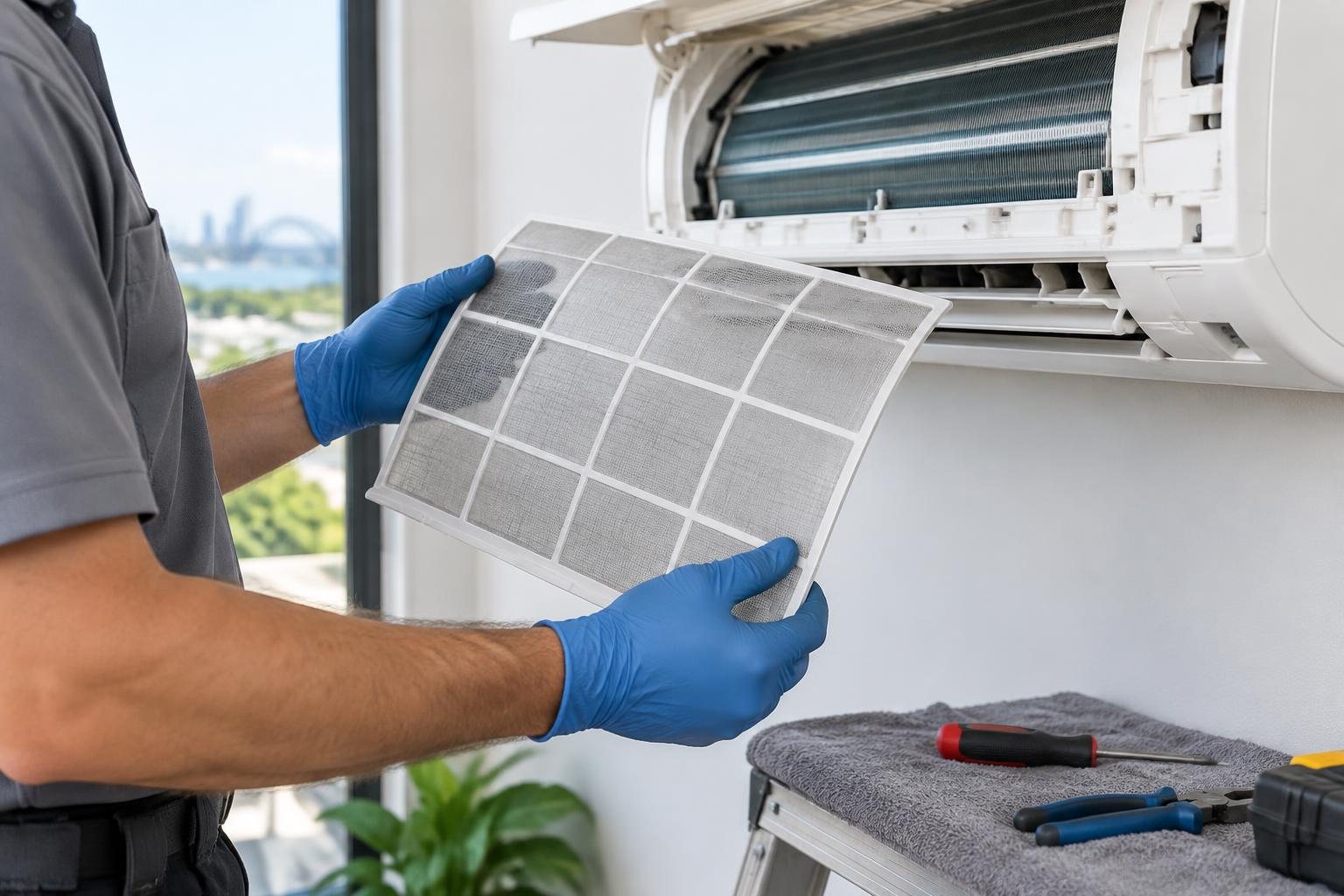
How Do I Clean My Ducted Air Conditioning in Canberra? Safe DIY Steps and When to Call a Pro
You can safely clean your ducted system’s return air filter, supply vents and outdoor unit area yourself. Avoid opening the indoor unit or ducts. If there’s mould, water leaks, ice or electrical faults, book a professional ducted clean and service to protect your system and air quality.
Key takeaways
- Clean or replace your return air filter every 1–3 months; more often in smoky or dusty Canberra conditions.
- Only clean filters, grilles and outdoor clearances yourself—leave coils, ducts, drains and electrical to licensed technicians.
- Musty smells, leaks, ice or tripping breakers are urgent signs: stop using the system and book a repair visit.
- Canberra’s frosty winters and bushfire smoke demand good filtration and regular servicing to maintain efficiency and air quality.
- Professional ducted cleaning in Canberra typically ranges from $180–$650+ (guide only), depending on system size and condition.
Is cleaning urgent, or can it wait?
If you have a musty smell, visible mould at grilles, water dripping from the ceiling, ice on pipes, or the breaker trips, it’s urgent: switch the unit off and book air conditioning repairs. If airflow is just a bit down or the filter looks dusty, a DIY filter clean today and a routine service can wait a week or two.
What can Canberra homeowners safely clean on a ducted system?
You can safely handle the filter, grilles and outdoor clearances with basic tools. Do not open the indoor unit, ducts or electrical covers.
- Return air filter: Wash or replace the filter in the return grille. This is the single most important DIY task.
- Supply vents/diffusers: Vacuum and wipe surfaces to remove dust build-up.
- Thermostat/zone controller: Lightly wipe the screen and fascia; don’t spray liquids directly.
- Outdoor unit area: Clear leaves and debris; lightly hose the coil from the outside with power off (avoid pressure washers).
- Visual checks: Confirm the return grille closes securely, vents are open, and nothing obstructs airflow.
For a deeper clean, odour removal, drain pan issues, coil fouling or suspected duct contaminants, book professional air conditioner cleaning.
What should you avoid doing yourself in the ACT?
Short answer: anything inside the unit, ducts or electrical system. Canberra’s safety and licensing rules are clear.
- Don’t open indoor unit panels, remove blower wheels, or apply coil cleaners yourself.
- Don’t adjust refrigerant or handle pipework—ARCtick licensing is required for refrigerant work.
- Don’t alter wiring or switches—electrical work must meet AS/NZS 3000 and be done by licensed trades.
- Don’t fog or spray biocides into ducts; it risks health, damage and voids warranties.
- Don’t climb into roof spaces without training, PPE and safe access; older homes may also have insulation hazards.
- Don’t tape over or force zone dampers; you can damage motors and airflow balance.
In the ACT, refrigerant handling requires ARCtick, and contractors should be licenced with Access Canberra. If in doubt, book air conditioning servicing and we’ll advise on safe options.
How do I clean my ducted return air filter properly?
Your return air grille is typically on a hallway ceiling or wall. Cleaning it correctly restores airflow and reduces energy use.
- Turn the system off at the controller.
- Place a drop sheet under the return grille.
- Open the grille: Most have latches or screws. Support the frame to prevent it swinging into the wall.
- Remove the filter:
- Washable mesh: Take outside. Vacuum first, then wash gently with warm water. Allow to dry fully before refitting.
- Pleated/disposable: Replace like-for-like size and rating. Don’t wash disposables.
- Wipe the grille frame and surrounding plaster to remove dust buildup.
- Reinstall the dry filter, check the seal is even, and close the grille securely.
- Restart the system and confirm normal airflow.
Tip: Canberra’s bushfire smoke and winter dust can load filters quickly. Check monthly during heavy use. If you have asthma or pets, consider a pleated filter with improved capture, but ensure your system’s fan can handle the extra resistance.
How often should a ducted system be cleaned in Canberra?
For filters: every 1–3 months. For professional servicing and cleaning: annually for most homes; every 6 months for allergy, pets or heavy use. Canberra’s heating season is long—run-time is high, so fouling builds faster than coastal climates.
For a detailed schedule by season, see our guide: How often should air conditioning be serviced in Canberra?
Step-by-step: cleaning supply vents and diffusers safely
Light dust on ceilings and vents is normal. Here’s the quick, safe clean-up:
- Turn the system off so dust isn’t drawn in while cleaning.
- Use a soft brush on a vacuum to remove dust from the vent face and surrounding ceiling.
- Wipe with a slightly damp microfibre cloth. Avoid dripping water into the vent.
- If removable, note the orientation, then carefully lower the diffuser to wipe the neck. Don’t drop screws into the ceiling void.
- Refit snugly and confirm the damper or directional vanes are set as before.
If you find black spots that smear, or a musty smell persists, it may be microbial growth in ducts or the indoor unit. That needs professional cleaning and sanitising.
Can I hose my outdoor unit coil?
Yes—gently and safely. Turn the system off at the isolator, then hose the coil from the outside-in to flush dust and pollen. Do not use high pressure; it can fold fins. Avoid soaking electrical panels. Restore power after the coil has drained off surface water.
In areas like Gungahlin with construction dust, a light hose every few months helps maintain efficiency.
Can DIY cleaning fix weak airflow or rooms that are too cold/hot?
Sometimes. A clogged return filter can cause low airflow and temperature imbalances. Clean the filter, open all vents in active zones, and run the fan on high to test.
If problems persist, zoning and balancing may be the issue. See: How to balance airflow between zones. If you notice big differences between rooms, book a service to check duct sizing, damper settings and static pressure.
What a technician actually does in a professional ducted clean
A proper clean goes beyond filters and grilles. Here’s what we do on-site as licensed ACT technicians:
- Isolate power and verify safe access to the indoor unit (roof space or underfloor).
- Inspect the return plenum, filter housing seals, and duct connections for leaks and gaps.
- Check blower wheel, indoor coil and drain pan for dust, bacterial growth and blockage.
- Apply non-acid coil cleaner and carefully rinse to restore heat exchange efficiency.
- Wet-vac and flush the condensate drain; treat the pan to reduce biofilm regrowth.
- Inspect supply ducts for kinks, compression, tears and insulation condition; repair minor issues.
- Test zone dampers, exercise motors, and confirm full open/close function.
- Measure static pressure, temperature split and airflow to verify performance.
- Advise on filter upgrades and return air sizing to suit Canberra’s climate and smoke events.
Illustrative example: A Tuggeranong home reports musty odour and poor heat on -3°C mornings. We find a blocked drain pan, heavily fouled coil, and two partial zone dampers. After coil clean, drain flush, and damper reset, temperature split returns to spec and odour resolves.
How Canberra’s climate and homes change how you clean
Canberra’s climate swings hard: -5°C frosts in winter, 35°C+ heat in summer. That means long run-times, more filter loading and more condensation risk in roof spaces.
- Bushfire smoke: Expect rapid filter clogging and lingering odours. Consider higher-efficiency pleated filters and more frequent changes, especially in areas like Tuggeranong during smoke events.
- Older brick-veneer homes (1960s–80s): Small return grilles and long duct runs amplify the impact of restrictive filters; stay with balanced, moderate-MERV options.
- New builds: Construction dust and insulation fibres can load filters; check monthly in the first year.
- Strata/body corporate: Access to roof spaces may require approvals—keep to filter and grille cleaning in apartments and book a professional for anything in common areas.
Rebates: While ACT Government Home Energy Support rebates target upgrades, not cleaning, better filtration and clean coils improve efficiency, helping cut winter heating costs via reverse-cycle performance.
Is a better filter worth it for Canberra’s smoke and dust?
Often, yes—but only if your system can handle it. A higher-efficiency pleated filter can reduce PM2.5 indoors during smoke events, but it increases resistance. Your fan must have enough static pressure headroom.
Many Daikin and comparable ducted systems perform well with a correctly sized pleated filter and adequate return grille area. If the fan strains or airflow drops, revert to a lower-resistance option or increase return size (a professional task). For airflow fundamentals, see: Return air vent placement for Canberra homes.
Indicative Canberra costs for ducted cleaning and minor fixes (guide only, not a quote)
Pricing varies by system size, access (roof height, tight spaces), filter type and the level of fouling. These typical ranges are for guidance only.
| Task | Who | Typical Canberra guide price | Notes |
|---|---|---|---|
| Site check & basic service (ducted) | Technician | $180–$320 | Controller checks, temperature split, visual inspection, basic clean. |
| Return filter supply (pleated/disposable) | DIY/Tech | $30–$120 each | Depends on size and filtration rating. |
| Indoor coil and blower clean | Technician | $260–$450 | Access dependent; includes cleaner and rinse, no duct fogging. |
| Condensate drain flush and pan treatment | Technician | $120–$220 | Often bundled with service; prevents leaks/odours. |
| Supply grille clean (whole home) | Technician | $110–$220 | DIY feasible for most; tech clean includes safe ladder work. |
| Duct sanitising (targeted) | Technician | $180–$380 | Only after source issues resolved; product-specific. |
| Minor duct repair (tear/compression) | Technician | $150–$350 | Per run; condition dependent. |
If your system also needs parts (e.g., a failed zone damper), costs will be higher. We’ll provide options on-site.
Common symptoms and what to do next
Use this quick guide to decide on DIY steps vs booking a technician.
| Symptom | Likely cause | DIY first step | Urgency |
|---|---|---|---|
| Weak airflow | Dirty filter, closed vents, blocked coil | Clean/replace filter; open vents | Book service if not resolved |
| Musty smell | Wet filter, dirty coil, blocked drain | Replace filter | Stop use and book repairs if smell persists |
| Drip from ceiling/indoor unit | Blocked condensate drain | Turn off | Urgent repair—risk of damage |
| Unit trips breaker | Electrical or compressor fault | Do not reset repeatedly | Urgent repair—licensed technician only |
| Cold/hot rooms uneven | Zoning/duct balance or filter | Clean filter; confirm vents open | Service to balance/inspect |
Will cleaning help systems that don’t reach set temperature?
It often helps, but not always. A blocked filter and dirty indoor coil reduce airflow and capacity, making it hard to hit setpoint. Clean the filter first. If that doesn’t fix it, a technician should check charge, coil, ducts and zoning. See: Why your ducted AC isn’t reaching set temperature.
Does DIY cleaning affect warranties or compliance?
Cleaning filters and vents won’t void warranties. Opening units, modifying ducts, or using chemicals can. In the ACT, refrigerant and electrical work require licensed professionals to stay compliant with ARCtick and AS/NZS 3000. Keep receipts and a service log; it helps with manufacturer support.
When should I call a technician instead of DIY?
Call us if you notice any of the following:
- Persistent odour after a new filter and grille clean
- Water leaks or signs of a blocked condensate drain
- Ice on pipes or the indoor unit
- Breaker tripping or error codes on the controller
- Visible mould growth or debris inside ducts
- Uneven airflow or zones not opening/closing properly
These point to issues inside the unit or ducts that require tools, chemicals and licensing. Book a comprehensive air conditioning service or a targeted repair so we can restore safe operation.
Frequently asked questions
Where is my ducted return air filter located?
It’s usually behind the largest grille on a hallway ceiling or wall. The grille often has latches or a couple of screws. Open it carefully while supporting the frame; remove the filter and note its size for replacement. If you’re unsure, we can identify it during a service visit.
How often should I replace or wash the filter in Canberra?
Every 1–3 months for most homes. During bushfire smoke, heavy pollen, or construction dust, check monthly and change as needed. Households with allergies or pets often benefit from more frequent changes and higher-efficiency pleated filters (if your system can handle the airflow).
Can I vacuum inside the ducts?
No. Reaching into ducts risks damaging liners, joints and zone dampers, and it can release dust into living spaces. If you suspect contamination inside ducts, book a technician to inspect, seal leaks, and determine if targeted cleaning or repairs are warranted.
Is it safe to use disinfectant sprays or fogging in ducts?
We don’t recommend DIY chemical treatments. Many products aren’t suitable for HVAC materials or occupied homes. Source problems (like blocked drains or dirty coils) must be fixed first. If sanitising is appropriate, we use HVAC-safe products with proper PPE and ventilation.
Why does my system smell musty when heating in winter?
Moisture in the drain pan or on the coil can foster microbial growth, especially after long heating cycles and cold nights. Replace the filter and run the fan only for 20 minutes. If odour returns, the coil and drain likely need professional cleaning and treatment.
Should I run the fan only after cleaning?
Yes. After replacing a filter or hosing the outdoor coil, run Fan Only for 10–20 minutes to dry surfaces and confirm normal airflow. Then resume heating or cooling. If you hear unusual noises, turn off and book a technician to check the blower or ducts.
Can a better filter reduce bushfire smoke indoors?
A higher-efficiency pleated filter can reduce PM2.5, but it increases airflow resistance. Your system must have adequate return size and fan capacity. If airflow drops or rooms become uneven, revert to a lower-resistance filter or consult us about return air upgrades.
Why do my vents have black marks on the ceiling?
Those “ghosting” marks are dust particles collecting where air flows along the ceiling. Clean the vent and surrounding paint gently, and ensure the filter is clean. If marks return quickly, we can check airflow and static pressure to reduce streaking.
Do I need to service the system if it seems fine?
Yes—annual servicing in Canberra prevents coil fouling, blocked drains and efficiency losses. Given long winter heating run-times, issues build before they show. A service also picks up early zone damper wear and duct leaks that increase bills.
What if I live in a strata unit?
You can clean your return filter and vents. For indoor unit or roof-space access, strata approvals may be required. We’re experienced with body corporate processes and can provide detailed reports for common property access if needed.
Need help or a professional clean? Call Capital Climate Solutions on 0434 096 497 or enquire online. We service homes across Canberra and Queanbeyan, and we’re happy to advise what’s safe to DIY versus what needs a licensed technician.
What a useful service report should tell you
A useful report identifies the system, records the condition of filters, coils, drains and outdoor airflow, and separates completed cleaning from recommended repairs. Ask for photographs of accessible problem areas and an explanation of any additional charge before approving work. Checks should follow the manufacturer's instructions and the system's condition; not every visit requires opening the refrigerant circuit.
Filter cleaning can often be performed by the owner when the manual allows it. Electrical testing, refrigerant handling and dismantling equipment are professional tasks. Switch the system off before removing user-serviceable filters and never spray water into electrical components. A persistent smell or water leak needs diagnosis, not simply more fragrance or a quick filter wipe.
Set a maintenance interval for the actual site
Dust, pollen, pets, long operating hours and commercial occupancy can increase maintenance needs. Follow the equipment manual and adjust the schedule to observed condition. For ducted equipment, include return-air filters, access to the indoor unit and condensate drainage; cleaning ceiling grilles alone does not service the whole system.
Maintenance can help preserve airflow and identify faults, but a fixed electricity saving or extra number of years of life cannot be promised for every system. Compare measured energy use under similar weather and occupancy if you want to assess a change. For a maintenance plan, confirm visit frequency, exclusions, renewal terms and the response arrangements in writing.
Sources and further reading
- Australian Government — Zoned Energy Rating Label
Explains climate-specific heating/cooling ratings, output capacity and noise figures; not a guarantee of a household's bills.
- Australian Refrigeration Council — Look for the Tick
Find licensed refrigeration businesses and check refrigerant-handling requirements. This link does not certify this business.
These sources support the general guidance, not this business's prices, credentials or project outcomes. Confirm current product and program conditions before committing to work.
Talk to Canberra's air conditioning specialists
Free onsite quotes across Canberra. Same-week bookings for most jobs.