
What size split system air conditioner do I need for a Canberra home? Accurate sizing for real winter heating and summer cooling
What size split system air conditioner do I need for a Canberra home? Accurate sizing for real winter heating and summer cooling Most Canberra bedrooms need 2.5–3.5 kW, typical living areas 5–7 kW, and larger open-plan s
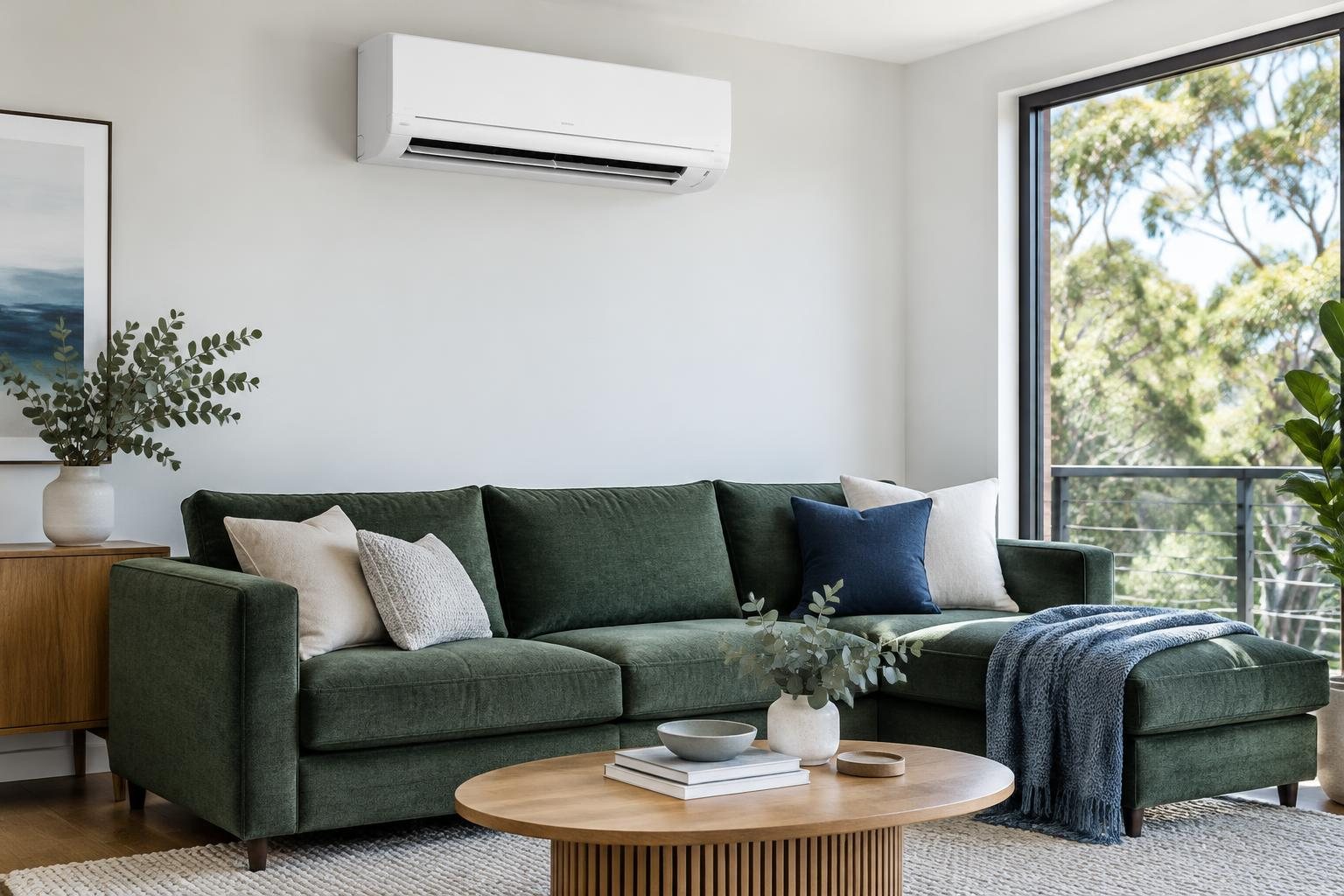
What size split system air conditioner do I need for a Canberra home? Accurate sizing for real winter heating and summer cooling
Most Canberra bedrooms need 2.5–3.5 kW, typical living areas 5–7 kW, and larger open-plan spaces 7–10 kW. Final size depends on insulation, ceiling height, glazing, orientation and air leakage. In Canberra, size for heating at around –5°C as well as cooling at 35°C. A professional heat-load check confirms the right capacity.
Key takeaways
- Canberra’s heating load is the sizing driver: confirm the unit’s heating capacity at sub‑zero ambient, not just its cooling kW.
- Rule of thumb: 80–125 W/m² for cooling, 120–180 W/m² for heating in Canberra, then adjust for insulation, ceiling height and glazing.
- Bedrooms commonly suit 2.5–3.5 kW; mid-sized lounges 5–7 kW; large open plans 7–10 kW (guide only).
- Check the Energy Rating label and cold‑climate performance; more stars usually means lower running costs across Canberra’s long heating season.
- Always use licensed ARCtick and electrical technicians; safe installs need proper refrigerant handling and AS/NZS 3000 electrical compliance.
If you’re planning a new split, our Canberra team can size and install it correctly. See our Split System Air Conditioning Installation service for details, brand options and what’s included: split system installation in Canberra.
Is split-system sizing urgent?
If your current unit can’t heat on frosty mornings, short-cycles constantly, or runs flat-out without reaching setpoint, it’s likely undersized (or installed poorly). That wastes power and shortens lifespan. It’s not an emergency unless there’s a fault (burning smell, tripping breaker, refrigerant hiss). For faults, stop using the unit and call 0434 096 497.
If you’re researching a new system, you can usually plan within 1–3 weeks. In summer heatwaves and winter cold snaps, Canberra lead times can stretch; book early in peak seasons.
How do I estimate split system size for a Canberra room?
Start with a quick heat-load estimate, then fine-tune for your home’s specifics. For many Canberra homes:
- Cooling: 80–125 W per square metre (m²) of floor area.
- Heating: 120–180 W/m² depending on insulation and leakage.
Adjust for ceiling height: add ~10% capacity for each 300 mm above 2.4 m. Increase capacity for large west-facing glazing, poor insulation, or leaky older homes. Decrease if you have excellent insulation, double glazing and good airtightness.
Illustrative example: 18 m² bedroom, 2.4 m ceiling, average insulation, modest glazing.
- Cooling load ≈ 18 × 100 W = 1.8 kW
- Heating load ≈ 18 × 140 W = 2.5 kW
- Result: choose a 2.5–3.5 kW split (check heating performance at –5°C).
For a 35 m² living room, 2.7 m ceiling, older windows and air leakage (common in 1960s–80s brick-veneer homes):
- Cooling ≈ 35 × 110 W × 1.1 (ceiling) = ~4.2 kW
- Heating ≈ 35 × 170 W × 1.1 (ceiling) = ~6.5 kW
- Result: a 6–7 kW unit is often appropriate.
Need a deeper dive? We’ve written a Canberra-specific load discussion here: Canberra’s climate: sizing your reverse cycle air conditioner perfectly.
What Canberra home factors change the required kW?
Several local factors push you up or down a size. A quick guide:
- Insulation and airtightness: R4.0+ ceiling insulation, insulated walls, and sealed gaps can reduce required heating capacity by 15–30% versus uninsulated homes.
- Ceiling height: 2.7–3.0 m ceilings increase room volume; add ~10–20% capacity.
- Glazing: Single-glazed west-facing windows add cooling load; double glazing and good shading reduce both heating and cooling demand.
- Orientation: North-facing solar gain helps winter heating; west-facing rooms need more cooling on 35°C+ afternoons.
- Air leakage: Older Canberra homes often leak; chimney flues, exhaust fans and gaps mean more heating capacity is needed.
- Open plan vs enclosed: Open spaces with stair voids or adjoining areas need larger units or zoning strategies.
- Internal gains: People, cooking, and electronics add heat; minor for most rooms but can affect home offices and kitchens.
- Usage: Bedrooms mainly need quiet, steady overnight heating; living areas need faster warm-up on sub‑zero mornings.
Do I size for heating or cooling in Canberra?
Size primarily for heating. Canberra’s long heating season, –5°C mornings, and sub-zero nights mean heating is often the limiting load. Check the unit’s published heating capacity at low ambient temperatures, not just the nominal rating at 7°C.
Many standard splits reduce output as the outdoor temperature drops; “cold climate” or “enhanced heating” models maintain higher capacity at –5°C to –10°C. Review the capacity curves in the brochure. Brands with strong low‑ambient performance (for example, Daikin models with enhanced heating) are popular locally. Also account for defrost cycles; expect brief pauses in heating on frosty mornings.
For a full buying overview across categories, see our Air Conditioner Buying Guide (Canberra, 2026).
What sizes suit common Canberra rooms?
Use this as a starting point, then adjust for your home. Capacities refer to nominal class sizes; always confirm low-ambient heating output on the model you choose.
| Room type (illustrative) | Typical floor area | Ceiling height | Home characteristics | Suggested split size (cool/heat) |
|---|---|---|---|---|
| Small bedroom or study | 10–14 m² | 2.4 m | Modern insulation, modest glazing | 2.0–2.5 kW |
| Average bedroom | 12–20 m² | 2.4–2.7 m | Average insulation, some leakage | 2.5–3.5 kW |
| Home office with west window | 12–18 m² | 2.4–2.7 m | Single-glazed west-facing | 3.5 kW |
| Small lounge | 20–30 m² | 2.4–2.7 m | Average insulation | 3.5–5.0 kW |
| Family/living | 25–40 m² | 2.4–2.7 m | Older windows, leakage | 5.0–7.1 kW |
| Large open-plan | 40–60 m² | 2.7–3.0 m | Open to kitchen/hallway | 7.1–10.0 kW |
| Townhouse upstairs retreat | 25–35 m² | 2.7 m | Stair void, solar gain | 5.0–6.0 kW |
Illustrative examples:
- In Gungahlin apartments, a 2.5 kW is often right for a double bedroom; check strata placement rules and condensate drainage (Gungahlin).
- In older Tuggeranong brick‑veneer lounges with 2.7 m ceilings and single glazing, a 6–7 kW unit is commonly needed (Tuggeranong).
If you’re deciding between a larger single unit or several smaller ones, read our comparison: Split system vs ducted air conditioning: Which wins in Canberra?.
What does a licensed technician check on site?
A proper site visit confirms load and installation feasibility. Here’s what we actually do:
- Measure room dimensions; note ceiling height, aspect, glazing area and shading.
- Assess insulation levels (ceiling/walls where identifiable) and check for leakage paths (flues, vents, gaps).
- Consider adjacent open areas or stair voids that share air volume.
- Confirm outdoor unit location for airflow, service access and neighbour/strata compliance.
- Calculate line-set length and height to ensure it’s within manufacturer specs; plan condensate drainage (gravity vs pump).
- Check switchboard capacity; determine need for a dedicated circuit and RCBO/RCD (AS/NZS 3000 compliance).
- Discuss noise preferences and night-time operation for bedrooms; propose quiet models where needed.
- Explain control options (simple remotes, Wi‑Fi, smart integration) and bushfire smoke filtration considerations.
Refrigerant handling must be performed by an ARCtick-licensed technician. Learn more: ARCtick – Look for the Tick. Electrical work must comply with AS/NZS 3000 and be carried out by licensed electricians (Access Canberra regulated).
Could a multi-split or ducted be better than multiple singles?
For two to five rooms, a multi‑split can consolidate outdoor units and reduce facade clutter. It gives room‑by‑room control but each head still needs correct sizing and line routing. For whole‑home conditioning, ducted reverse cycle is often more cost‑effective per room.
Explore options and pros/cons here: multi split air conditioning in Canberra. If your priority is efficient heating across the home, also see our reverse cycle air conditioning service.
Canberra-specific tips: climate, rebates and power
Local realities to factor into your decision:
- Climate extremes: Design for –5°C heating performance and 35–40°C summer peaks. Confirm low-ambient heating capacity and defrost behaviour.
- Energy Rating label: Check cooling/heating stars and capacity bands on the official Energy Rating label (GEMS). More stars generally means lower running costs, especially valuable in long heating seasons.
- ACT energy transition: Many households are replacing gas with efficient reverse‑cycle heating. Sizing correctly ensures comfortable all‑electric living.
- Rebates/support: ACT Government programs (e.g. Home Energy Support for eligible households) can assist efficiency upgrades; requirements change, so check current criteria before purchase.
- Utilities: Evoenergy network constraints and ActewAGL plans may influence off‑peak strategies or smart controls; a right‑sized unit with good COP saves on bills.
- Bushfire smoke: Choose models with quality filtration and enable recirculation during smoke events; consider optional high‑density filters and regular cleaning.
- Strata approvals: In inner‑city units and townhouses, check body‑corporate rules on outdoor placement, penetrations and condensate routing early in the process.
What does a correctly sized split system cost in Canberra?
Guide only, not a quote. Prices vary by brand, model, complexity, wall vs roof bracket, electrical work, condensate pump, line length, and access.
| Split size class (cool/heat) | Typical room | Typical installed price (Canberra) |
|---|---|---|
| 2.0–2.5 kW | Small bedroom/study | $1,900–$3,000 (guide only) |
| 3.2–3.5 kW | Standard bedroom/home office | $2,200–$3,400 (guide only) |
| 5.0 kW | Small lounge/dining | $2,800–$4,200 (guide only) |
| 6.0–7.1 kW | Family/living room | $3,200–$5,200 (guide only) |
| 8.0–10.0 kW | Large open-plan | $4,000–$6,800 (guide only) |
What changes the price:
- Brand and model (premium low‑ambient performance and high star ratings cost more but run cheaper).
- Electrical upgrades (dedicated circuit, switchboard capacity).
- Outdoor mounting (roof/wall brackets), crane or difficult access.
- Long line runs or wall penetrations through double brick/concrete.
- Condensate pump vs gravity drain.
Maintenance that protects performance and capacity
Even the right-sized system struggles if airflow is restricted. Keep it clean and serviced:
- Rinse or vacuum return filters every 4–8 weeks during peak seasons.
- Annual professional service to check coils, fans, drains, refrigerant charge and electrical connections.
- Clear outdoor coils of leaves and debris; ensure free airflow.
- Replace worn remote batteries and recalibrate schedules before winter and summer peaks.
For more detail on local schedules, see How often should air conditioning be serviced in Canberra?
When should I call a technician?
Call 0434 096 497 if:
- Your split can’t reach temperature on cold mornings despite running constantly.
- Airflow is weak or the unit short-cycles and ices up.
- You notice water leaks indoors, breaker trips, burning smells, or unusual noises.
- You’re unsure between two sizes—small errors are costly in Canberra’s winters.
Refrigerant and electrical work are not DIY. Use ARCtick-licensed technicians for refrigerant handling and licensed electricians for circuits. If you’re ready to install, start here: split system air conditioning installation in Canberra.
Frequently asked questions
Is the kW rating for cooling the same as for heating?
Not always. Many models have higher nominal heating kW than cooling, but their heating output can drop at sub‑zero ambient. Always check the manufacturer’s capacity tables for –5°C to –10°C performance so you size correctly for Canberra winters.
How does ceiling height affect sizing?
Higher ceilings increase room volume. Add roughly 10% capacity for each 300 mm above 2.4 m. Large voids or raked ceilings may need even more, or a different placement to avoid stratification and improve air mixing.
Will a bigger unit heat faster and cost less to run?
Oversizing can cause short cycling, drafts and humidity issues, and may use more power. Right‑sized inverter splits can throttle down efficiently, running longer at low power to maintain comfort and reduce start/stop wear.
Do I need three-phase power for a large split?
Most residential wall splits up to around 10 kW are single‑phase. Three‑phase is more common for large ducted systems or commercial units. We’ll check your switchboard capacity and advise on any electrical upgrades.
Where should the indoor unit go for best performance?
Centre it on the primary occupied area with clear throw across the room. Avoid blowing directly onto seating or beds. Keep return clear of cupboards or bulkheads. We’ll also consider condensate drain path and refrigerant line routing to the outdoor unit.
Can one split do multiple rooms?
It can temper adjacent spaces if doors are open and areas are small, but comfort will vary. For consistent multi‑room comfort, consider multiple splits or a multi‑split system with correctly sized indoor heads.
What energy rating should I look for?
More stars on the Energy Rating label usually means lower running costs. In Canberra, prioritise high heating efficiency (COP/HSPF) because the heating season is long. Balance efficiency with cold‑climate capacity and your budget.
How does bushfire smoke affect split systems?
Run in recirculation with windows shut. Clean or replace filters more often, and consider high‑density filter options if available. Outdoor coils can collect ash; a professional clean after smoke events helps maintain performance and indoor air quality.
Is a reverse-cycle split better than a cooling-only model?
Yes, for Canberra. Reverse‑cycle gives efficient heating and cooling in one unit, often replacing or reducing reliance on gas. See our reverse cycle air conditioning service for benefits and options.
What if my home is very leaky or uninsulated?
You’ll need more heating capacity to compensate. We can size accordingly, but also recommend targeted draught‑sealing and insulation upgrades. A small spend on envelope improvements often lets you choose a smaller, quieter, and cheaper‑to‑run unit.
Do brands differ in low-temperature performance?
They do. Some models are engineered for cold climates and hold capacity better at –5°C to –10°C. Review capacity curves and consider reputable cold‑climate options such as those from Daikin and other leading brands.
Ready for the right size split system? Get a precise heat-load assessment and neat installation from Capital Climate Solutions. Call 0434 096 497 or enquire online for fast local help.
Compare an installation quote, not just a unit price
A supply-and-install quote should identify both indoor and outdoor model numbers, the electrical work, the pipework allowance and the proposed location of each unit. A headline price does not tell you whether additional pipe length, wall brackets, condensate pumps, old-system disposal or switchboard work is included. Ask for these items to be listed before comparing totals.
For a Canberra apartment or townhouse, confirm owners-corporation permission before committing to a date. An outdoor unit can affect common property, neighbouring bedrooms and the appearance of a building. Heritage controls, electrical requirements and noise restrictions are site-specific; a standard residential example is not an approval for every property.
Size for winter heating as well as summer cooling
Room area alone is not a heat-load calculation. Ceiling height, insulation, glazing, orientation, air leakage and which rooms are used together all change the required capacity. Compare the exact model's cold-climate heating rating and published output at the relevant outdoor temperature, rather than assuming every unit from a brand performs identically.
Before handover, ask for operating instructions, the model and serial numbers, commissioning records and written warranty conditions. Refrigerant work needs the appropriate licence. A manufacturer's warranty and an installer's workmanship cover are different promises, with different exclusions and claim procedures.
Sources and further reading
- Australian Government — Zoned Energy Rating Label
Explains climate-specific heating/cooling ratings, output capacity and noise figures; not a guarantee of a household's bills.
- Australian Refrigeration Council — Look for the Tick
Find licensed refrigeration businesses and check refrigerant-handling requirements. This link does not certify this business.
- ACT Government — Choosing reverse-cycle heating and cooling
Compares split, multi-split and ducted systems for Canberra homes. Actual running costs depend on the building, tariffs and operation.
- ACT Government — Home Energy Support rebates
Eligibility, workshops, property-value limits and eligible upgrades. Approval is not automatic; check current rules before ordering.
- ACT Government — Sustainable Household Scheme
Current loan terms and eligible products. The general scheme now advertises a 3% low-interest loan; concession arrangements and earlier applications have different terms.
These sources support the general guidance, not this business's prices, credentials or project outcomes. Confirm current product and program conditions before committing to work.
Talk to Canberra's air conditioning specialists
Free onsite quotes across Canberra. Same-week bookings for most jobs.